Most Businesses Ignore This Growth Hack (and Miss Out on Clients)

Most Businesses Ignore This Growth Hack (and Miss Out on Clients)
Most businesses are obsessed with social media, ads, or SEO tweaks. But there’s one growth channel almost everyone overlooks: posting your business in sector-specific directories.
Yes, directories. They sound boring. But if you do them right, they can be your highest-ROI growth hack.
✔ You “fly” on their authority: Most directories rank high in Google. By being listed, you appear too, even if your own site is stuck on page 87.
✔ SEO rocket fuel: Backlinks from high-authority sites boost your rankings and unlock organic traffic you’d never get otherwise.
✔ Instant credibility: When prospects find you on respected platforms, they automatically trust you more.
✔ Ready-to-buy leads: People browsing directories aren’t just curious, they’re actively looking for products or services to buy.
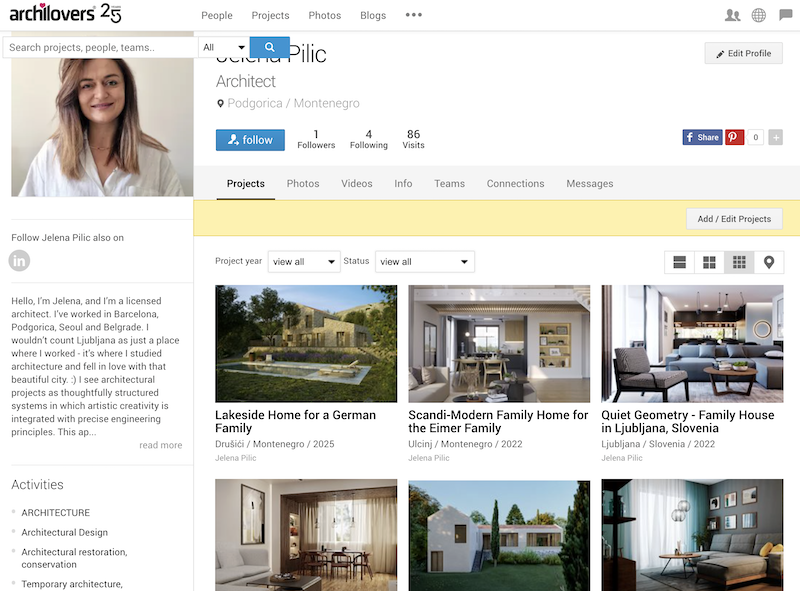
When my wife Jelena started her architecture studio, we tried many channels. Social media brought likes, but not many real projects. The real breakthrough came when we listed her business in architecture and design directories.
We systematically added her profile to platforms that matter in her field:
• Google Maps (an absolute must for every business)
• Archilovers
• Houzz
• Architizer
• Behance
• MapsArch
• Archello
What happened next:
It’s surprisingly easy to find the right directories:
1. Ask AI smartly: Use prompts like “List all online directories where businesses in [your sector] should be listed” or “What are the top directories for [industry] professionals?” This gives you a quick starter list.
2. Check competitors: Google your product or service and note where competitors show up. Then reverse engineer their backlinks (tools like Ahrefs, SEMrush, or even free backlink checkers can help).
3. Leverage curated lists: Search “Top 10 [industry] directories” or “Best platforms for [industry professionals]”. Many bloggers and agencies have already done the legwork of compiling directories, you just need to plug your business in.
The mistake most people make is doing it ad-hoc. Instead, set up once and then upload everywhere.
1. Prepare your “Directory Kit” upfront:
• Short company description (50–100 words)
• Long company description (300–500 words)
• Logo in high resolution (square & horizontal)
• 5–10 best images of your work/product
• Website URL + socials
• Contact details
2. Upload the same package everywhere.
Each directory might have slightly different requirements, but if you’ve got your assets ready, posting takes 5–10 minutes per site.
3. Track submissions.
Keep a simple sheet with: Platform, Date Posted, Link, and Login Info. This way you can update or optimize later.
Pro Tip: Use a unique tracking link for each directory so you can see exactly which ones send traffic and leads.

• Go to Google’s Campaign URL Builder.

• Enter your website URL, source (e.g., “archilovers”), and medium (e.g., “directory”).

• Copy the generated URL with UTM parameters (it will look like: yourwebsite.com/?utm_source=archilovers&utm_medium=directory&utm_campaign=listings).

• Use that tracking link instead of your plain website link when posting.

• In Google Analytics, you’ll be able to see exactly which directories deliver traffic and conversions (Google Analytics > Reports > Acquisition > Traffic acquisition and filter by your campaign/source).
Directories are the most unsexy growth hack out there. But they deliver: leads, SEO, trust, and authority. Done once, they keep working for years.
Don’t overlook them. Build your directory kit, upload it everywhere, and let the internet quietly work in your favor while you sleep.
 Loved the story? Share it to inspire others and spark new ideas!


 LinkedIn
 Twitter (X)
 Facebook
 Copy link